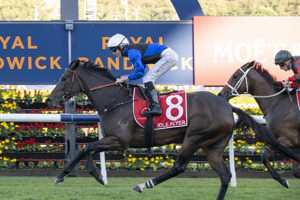
For seasonal breeders such as the horse, the lengthening days of spring have long been associated with increased fertility, enhanced performance, improved coat condition and better health and well-being.
The duration of light exposure and the quality of the light administered are key to regulating these important physiological changes.
Understanding this regulation is a fundamental factor to consider in our management of horses for breeding and performance.
THE DURATION OF LIGHT
The first key understanding is the duration of light exposure. Horses are long-day breeders. Their natural reproductive period coincides with the light-filled days of summer.
A normal winter’s day consists of 16 hours of dark and 8 hours of light (Short Day). A summer’s day consists of approximately 16 hours of light and 8 hours of dark (Long Day). It is the rapid transition from Short Day to Long Day that can stimulate early reproductive activity and ovulation in mares. On average, it takes 75 days from initiation of Long Day light treatment to the first ovulation of the season.
We recommended that Long Day light therapy begins no later than July 1st (SH)/ December 1st (NH) to ensure that mares are ready for breeding in time for the official start of the breeding season.
For pregnant mares the same holds true. Nature intended that pregnant mares foal during the springtime. The tendency to want to breed mares earlier in the year means that mares now foal at a darker time of year than they normally would in the wild.
This has resulted in negative consequences for breeding efficiency including longer gestation lengths, smaller foals and poor post-foaling fertility problems.
As well as hormones that control reproduction, Long Day photoperiod stimulates important growth hormones that allow foals to mature in utero, mares to produce adequate milk and colostrum and ensures mares are cycling post-foaling and ready to be rebred. We recommend initiating Long Day light therapy for pregnant mares 90 days prior to foaling due date for best breeding outcomes and optimum foal health.
Published studies have shown that mares with a history of prolonged gestation lengths can tighten up by 10-15 days when this lighting regime is employed.
Stallions too need adequate light duration for optimum fertility. While they can breed all year long, fertility is highest during the longest days of the year. Semen volume, sperm concentration, libido and reproductive behaviour are all significantly influenced by the duration of light.
It is recommended that Long Day light therapy for stallions also be initiated 70 days prior to the time of peak reproductive activity. This is especially important for young stallions facing their first, second or third book of mares when testes size naturally limits the amount of sperm that can produce.
THE QUALITY OF LIGHT
All light is not equal. Natural daylight spans the visible light spectrum between ultra-violet on one end and infra-red light on the other. In particular, daylight contains a very high component of blue light wavelengths.
It is for this reason that mammals, such as horses and humans, possess receptors in the eye that are most sensitive to blue light.
These receptors are different from the rods and cones used to translate light into vision. They are instead used to convey the time of day to the animal’s internal biological clock.
This biological clock governs the activity of every cell and organ in the body, maintaining important daily rhythms in alertness, metabolism, immune function, muscle function, cardio-respiratory function and regeneration and repair.
Normal indoor lighting falls significantly short on providing the optimum light spectrum for humans and animals to function well. For the body’s internal body clock to work most effectively, stable lighting should replicate the lighting provided by the natural environment as best it can. This means:
1) daytime lighting should provide high levels of blue wavelength light
2) a gradual transition from dark to light and light to dark should occur at dawn and dusk
3) white light pollution at night should be eliminated, avoiding unwanted stimulation to the sensitive receptors in the eye that play havoc with internal body clock rhythms
4) the lighting system should be easily programmed to provide seasonal changes in day length
OUR PRODUCTS
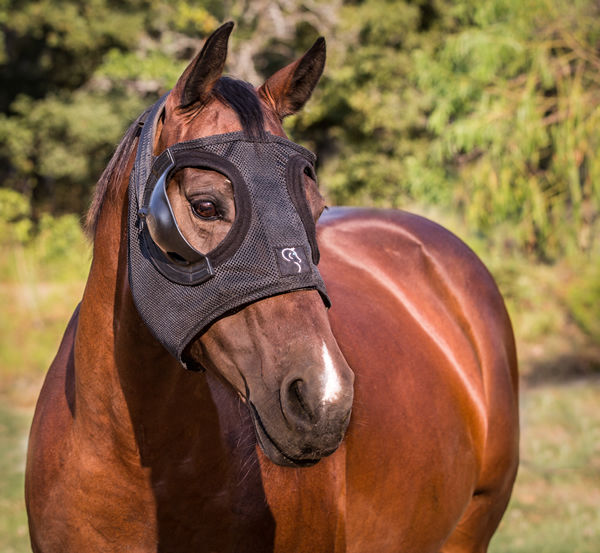
Equilume’s suite of products have been specifically designed to provide the horse with optimal lighting that best mimics the qualities of the natural environmental day-night cycle in order to create and maintain optimum health and performance.
Our products include the Equilume Stable Light and the Equilume Light Mask designed to maximise performance and breeding efficiency.