Over the years I have written ad nauseum about what the ATO considers to be a “business” of horse breeding and/or racing for income tax purposes.
This is a crucial topic as unless your activity is considered a business by the ATO losses cannot be deducted nor can GST registration be applied for.
In addition, the ATO have many concessions targeted towards ‘Primary Producers’ who conduct a ‘business’ and thus it is no surprise that many of my rural clients want to know if they are conducting a Primary Production (PP) business for the purpose of utilising these concessions. I’m sure the curiosity of my clients extends to the readers of my articles, so this article will focus on:
- What is a PP activity?; and
- What are the concessions they are eligible for?
- Tax concessions for ‘Primary Producers’
Primary producers face a number of challenges that can adversely affect their operations and cash flow.
From a tax perspective, the concept of ‘primary production’, or more specifically, a ‘primary production business’ is relevant because primary producers are provided with, as noted above, a range of income tax concessions that are not available to other businesses.
Although primary producers are subject to the general rules relating to assessable income and allowable deductions, primary producers (and certain other landholders) receive special concessions under the Tax Act. Those most relevant to breeding/racing are listed below.
- Profits may be taxed on a concessional basis in the case of forced sales and death or destruction of livestock and insurance recoveries on loss of livestock (spread over 5 years) or loss of trees by fire
- Special provisions relate to the treatment of livestock, as distinct from other kinds of trading stock, in calculating a primary producer's taxable income, e.g. mare and stallion write-off rules
- A depreciation deduction is allowable on various structural improvements on land used to carry on a primary production business
- Capital expenditure on a water facility is deductible immediately if post-12 May 2015 expenditure, otherwise over 3 years
- Capital expenditure on fodder storage assets is deductible immediately if the start time is on or after 19 August 2018, otherwise post-12 May 2015 expenditure is deductible over 3 years
- Post-12 May 2015 capital expenditure on fences is 100% deductible
- Capital expenditure in establishing horticultural plants (including grapevines) is deductible over their effective life
- Capital expenditure on a landcare operation for land in Australia used at the time for carrying on a primary production business is deductible immediately
- Capital expenditure incurred in connecting power to land or upgrading the connection, and also for capital expenditure incurred on a telephone line on or extending to land on which a primary production business is carried on, is deductible over 10 years
- The incomes of individual primary producers may be eligible for averaging tax offsets, helping to smooth out their tax liabilities
- Deposits to the Farm Management Deposits Scheme are tax deductible with corresponding assessability when the deposits are withdrawn
Additionally, individuals that carry on a PP business may be eligible to make PAYG instalment payments twice a year (rather than quarterly) if their PP income exceeds their deductions in the ‘base year’.
Primary producers may also be eligible to pay GST in two instalments.
There are a range of other tax concessions that are not necessarily specific to primary producers, such as the ‘Small Business Entity’ concessions (e.g., an immediate write-off for the cost of certain depreciating assets), fuel tax credits, and research and development tax offsets.
1.1 Other concessions may apply to primary producers
It should be noted that various non-income tax related concessions may also be available to primary producers. For example, some States/Territories provide a land tax exemption for primary production land, or stamp duty concessions (e.g., where farmland is transferred between family members as part of an intergenerational succession plan). Another example is the potential concessional treatment of farmland under the age pension assets test.
The following discussion considers the concept and significance of a ‘primary production business’ for income tax purposes. It should be noted that the general focus relates to small to medium sized businesses, including family-owned businesses.
- What is primary production?
The concepts of ‘primary production’ and ‘primary production business’ are central to accessing the various tax concessions that are only available to primary producers.
The phrase ‘primary production business’ is defined in the Tax Act. In this regard, a taxpayer (whether an individual, trust, company or partnership) is taken to carry on a primary production business if the taxpayer carries on a business of:
- cultivating or propagating plants, fungi or their products or parts (including seeds, spores, bulbs and similar things), in any physical environment; or
- maintaining animals for the purpose of selling them or their bodily produce (including natural increase); or
- manufacturing dairy produce from raw materials that you produced; or
- conducting operations relating directly to taking or catching fish, turtles, dugong, beche-de-mer, crustaceans or aquatic molluscs; or
- conducting operations relating directly to taking or culturing pearls or pearl shell; or
- planting or tending trees in a plantation or forest that are intended to be felled; or
- felling trees in a plantation or forest; or
- transporting trees, or parts of trees, that you felled in a plantation or forest to the place: or
- where they are first to be milled or processed; or
- from which they are to be transported to the place where they are first to be milld or processed.
It is clear from the above definition that the activity being carried on by the taxpayer must amount to the carrying on of a ‘business’. Whether this is the case is a question of fact our web site has numerous articles to this topic, see www.carrazzo.com.au. However, to constitute a ‘primary production business’, the activity must also fall within one of the above categories of PP activities.
- Examples of ‘primary production’ activities
The following is a non-exhaustive list of activities that generally constitute ‘primary production’.
- Aquaculture (e.g., the farming of fish, shrimp, oysters, algae, and other aquatic organisms).
- Artificial breeding services (e.g., selling semen collected from bulls owned and maintained to provide artificial breeding services for the beef cattle industry).
- Commercial fishing.
- Crop growing (e.g., barley, grain, wheat).
- Dairy farming (i.e., manufacturing dairy produce from raw materials produced, including milk, cheese, yoghurt, curd, butter, cream, custard, ghee, ice cream, quark, whey).
- Forestry operations (e.g., planting or tending trees intended for felling, or transporting felled trees for milling or processing
- Horse breeding – see below
- Horticulture (e.g., growing plants or trees for their produce or sale, including fruit, vegetables, olives, vines, nuts, grains and non-food crops such as flowers, plants, ornamental trees, etc.).
- Rearing livestock for sale (e.g., cattle, poultry, rabbit, sheep, pigs, goats, kangaroo and freshwater crayfish).
- Rearing livestock for the production and sale of their bodily produce (e.g., cows and goats for milk, chickens, quail and ducks for eggs, sheep for wool, cow for hide, ducks for feathers/down and bees for honey
2.2. Examples of non-primary production activities
The following is a non-exhaustive list of activities that are generally not considered to be ‘primary production’ activities:
- Agistment (where land is used solely for agistment) – see below
- Beach worming (as worms are not considered to be ‘animals’ for primary production purposes.
- Horse racing as a stand-alone activity - see below
- Lease of land, plant or machinery to an entity operating a primary production business.
- Live sheep exporting (as distinct from traditional farming operations)
- Kelp harvesting (if operations are limited to gathering storm cast kelp)
- Selling standing timber (without tending or felling the trees)
- Wind farming
2.3 Primary production activities and the racing industry
As you can see from above, horse breeding is noted as a primary production activity, thus the PP concessions noted above are available to horse breeders.
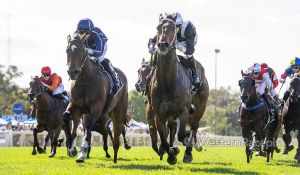
Horse racing without associated breeding activities is not a PP activity.
“Pin-hooking” (where weanlings acquired are later sold as yearlings) can also be reasonably argued as being a PP activity on the basis that it meets the definition of “rearing livestock for sale” (see above).
Agistment is often misunderstood – it is not a PP activity unless it is integrated with other primary production activities of an entity. ATO rulings note that that it is not a PP activity where it is the sole activity of a business.
Please don’t hesitate to contact the writer if you wish for me to clarify or expand on any of the matters raised in this article.
PAUL CARRAZZO CA
CARRAZZO CONSULTING PTY LTD
801 Glenferrie Road, Hawthorn, VIC, 3122
TEL: (03) 9982 1000
FAX: (03) 9329 8355
MOB: 0417 549 347
E-mail: paul.carrazzo@carrazzo.com.au
Web: www.carrazzo.com.au