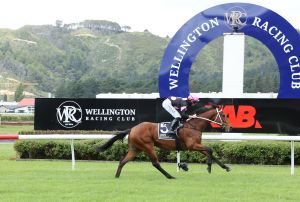
There is no shortage of horse racing and/or breeding operations who want to maximise the usage of their property through the providing of agistment services.

What is often overlooked in this pursuit, from a tax perspective, as that the activity also must meet the ATO business tests in its own right, it is simply not enough to argue that running a ATO approved racing or breeding business, on the same property or within the same entity, will automatically mean that an agistment activity is also an income tax business. A recent tax case, we’ll refer to it as the “DQTB” case, decided in the Brisbane AAT reinforces this point.
The Tribunal in DQTB affirmed the ATO’s objection decision that the DQTB husband and wife partnership were not carrying on a business of agistment activities— therefore the deductions claimed were limited to the amount of the agistment income derived.
Facts
The Taxpayers were formerly employed by the same organisation. KHMQ had health issues, and from October 2015 was accepted by Comcare as permanently impaired. DQTB’s position was made redundant in November 2016.
The taxpayers (DQTB and KHMQ) acquired a 75-hectare property in Tasmania in 2017 on which to live and run a grazing business. For that purpose they set up a company of which DQTB was secretary and KHMQ was sole director. DQTB held qualifications in veterinary science and had published extensively in scientific journals, having a particular focus on sheep reproduction. However, she was not a licensed vet.
Within the first few years of purchasing the property the couple spent nearly $120,000 constructing additional fencing, dams, water tanks and a laneway, and subdividing paddocks. The company “paid” the taxpayers $20,000 per annum as an agistment fee to conduct the grazing business on their property, including full payment for the 2017 year in which agistment only occurred for a few months. To make that payment the $20,000 was loaned to the company by the taxpayers. The loan was not documented and there were no agreed repayment terms.
DQTB held high-level tertiary qualifications in veterinary science, with a focus on sheep. DQTB also had a mental illness, and her psychiatrist suggested returning to activities relating to her scientific background could be therapeutic and form part of long-term rehabilitation goals. In this context, the Taxpayers considered the idea of running a sheep farm.
The Property comprised 75.42 hectares (186.37 acres) and included a dwelling and sheds.35 They also acquired chattels for $30,000, including a tractor with various attachments and two generators.
Following advice, they set up a company (incorporated on 10 May 2017) with the intention of running a farming business. The Taxpayers were the shareholders. DQTB was the secretary and KHMQ the sole director.
In the 2016–17 income year, the Taxpayers incurred significant costs — including $42,720 on fencing, as well as adding several large dams and large water tanks.
Each taxpayer returned $10,000 as agistment income in the income year ended 30 June 2017 and claimed significant deductions for expenses said to be associated with their carrying on a business of providing agistment and full care animal husbandry and veterinary services to the company.
The ATO issued the taxpayers with amended assessments, assessing them in each case on the footing that the deductions allowable were limited to the agistment income of $10,000 derived in the 2017 year. In DQTB’s case, an administrative penalty at the rate of 50% of the shortfall for recklessness was also imposed (amounting to $15,404). The ATO disallowed the taxpayers’ subsequent objections in full and the taxpayers sought review.
Primarily at issue was whether the taxpayers, in conducting the agistment arrangements, were carrying on a business.
The ATO submitted that the taxpayers’ activities on the property were in the nature of a hobby reflecting the professional background and veterinary interests of DQTB, and that in any case they had not discharged the burden of proving they were carrying on a business. It was contended that there was insufficient evidence to prove the arrangements between the taxpayers and the company were such that the $20,000 agistment fee was in return for both making the land available for agistment and the provision of animal husbandry services and veterinary care as the taxpayers maintained.
Judgement findings
The tribunal accepted that an annual fee of $20,000 was not an uncommercial amount to charge for agistment on the property (albeit not in respect of the 2017 year when agistment occurred for only a few months), and that the taxpayers did actually provide some animal husbandry and veterinary care services for the calves and lambs on the property.
However, there was an absence of persuasive evidence that they had agreed to provide any particular level of care in return for the agistment fee. Further, there were services that DQTB, not being a licensed vet, could not provide and which were instead provided to the company by a local vet. That the external veterinary services were provided to the company rather than to the taxpayers was also inconsistent with a conclusion the taxpayers provided “full service” husbandry and veterinary care service.
Although there was some evidence that would support a conclusion that the company had a profit-making purpose, the same could not be said of the taxpayers’ agistment activities. In the absence of detailed direct evidence from the taxpayers, any sound basis on which relevant inferences could be drawn and any profit ever emerging, a determination that they had a profit-making purpose for the agistment arrangements could not be made.
The agistment transactions were conducted in an uncommercial manner, any business plan the taxpayers may have formed did not address the fundamental aspect of how their business activities might generate a profit, and the expenditure incurred was disproportionate to the income likely to be derived from agistment fees. The weight of the evidence pointed against a conclusion that the taxpayers were conducting a business.
It was not in dispute that the Company carried on a grazing business, agisting stock on the Property. The company paid the Taxpayers an annual agistment fee of $20,000. At the end of the 2016–17 income year, KHMQ created and signed (both as director of the Company and on behalf of the Taxpayers) a document which provided for payment of the fee by the Company, stating that there would be no pro-rating of the annual fee for part years.
An agistment activity can be considered an income tax “hobby”, such as that conducted by DQTB, regardless of the sophistication or size of the property. The property sales listing described the property as approximately 140 acres of grassed and 50 acres of light bush land which is level to undulating with a restored character home. Eleven paddocks, numerous spring filled dams of which there are 8, and 3 waterholes with a winter creek. Strong steel stock yards and several usable outbuildings including a barn/machinery shed.
Summary
It can be gleaned from the decision that the taxpayers failed to argue an agistment business based on:
- A business model with limited or no prospect of profit;
- A business plan was prepared, which is a positive, but the plan was not specific enough as to how a profit could be derived;
- The activities were conducted in an “uncommercial manner”, i.e., there was a disproportionate level of expenditure based on earnings potential; and
- The activities promised to the company were not delivered, i,e., the veterinary services were provided by the local vet and not the taxpayers.
The ATO acknowledged, though, that there is no special rule relating to whether providing agistment arrangements constitutes carrying on a business. That is a question of fact to be decided by reference to all the relevant evidence and having regard to well-known indicia of a business referred to in numerous case authorities which include:
(a) the existence of a profit-making purpose;
(b) the scale of the activities;
(c) the commercial character, or otherwise, of transactions; and
(d) whether the activities are systematic and organised, often described as carried out in a business-like manner.
Mere agistment or agistment with animal husbandry and veterinary care services?
This case decision reflects that DQTB was conducting a “mere agistment” activity, as distinct from a commercial agistment activity.
As a useful reference, a tribunal member, within this decision, drew a distinction between mere agistment and agistment with management and care of animals, stating:
“Agisting another’s livestock does not ordinarily constitute the carrying on of a business. Agistment fees ordinarily are in the nature of rent. However, where a land owner is charged with the management, maintenance and care of the animals agisted then it is possible that the person is carrying on a business, the reward for which is the agistment fee. This is more likely if the level of the agistment fee depended on the effective management, maintenance and care of the animals. For example, if a landowner agreed with the owner of a herd of cattle to ensure their good health, proper veterinary care and husbandry of the progeny, marketing of their bodily produce and maintenance of the herd, then that landowner may be carrying on a business of primary production.”
You are welcome to contact me if you would like me to clarify or expand on any matters I have raised in this article.