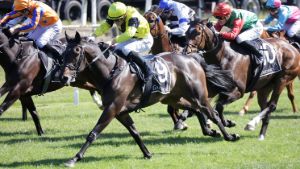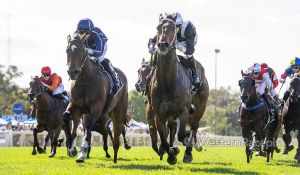
New Zealand will lead a world-first effort to turn decades of injury research into an early-warning system for racehorses.
The New Zealand Equine Safety Initiative (NZESI) will build a connected picture of the Thoroughbred across its whole life, from early development through training, racing and retirement. It will combine information on growth and development with training records, clinical history and sensor readings to build a more complete picture of each horse and the factors associated with injury risk.
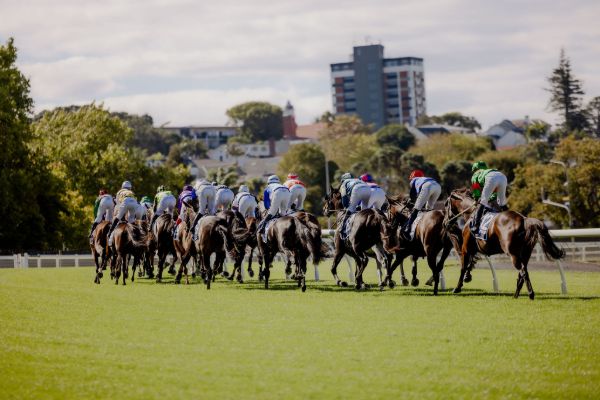
The first research projects are already underway in partnership with New Zealand Thoroughbred Racing. Training and clinical records are being collated, growth data is being gathered from young horses and wearable sensors are being tested on horses in training, including two-year-olds.
NZESI is inviting trainers, breeders, veterinarians, owners and researchers to follow the work as it develops or reach out if they would like to get involved.
The initiative was conceived by Professors Wayne McIlwraith, Chris Rogers and Chris Kawcak, three internationally recognised researchers whose work spans equine orthopaedics, early development and injury prevention.
“Racing has never had a system that connects what happens to a horse from its first months of life through training and racing,” Professor McIlwraith said.
“NZESI will build that system, bringing science and real-world information together to make injury more predictable and preventable. New Zealand can lead it, but its potential is global.”
Why New Zealand
New Zealand is uniquely placed to lead the work. Its welfare standards and safety record already rank among the world’s best, while the horse population is large enough to support meaningful research and connected enough to follow horses through its life cycle.
It also has internationally recognised equine researchers and an industry with a strong motivation to improve welfare.
“New Zealand is big enough to produce robust data and small enough to connect it,” said Professor Chris Rogers MAgSci, PhD, of Massey University.
“We can study the horse across its whole life, with breeders, trainers, veterinarians and researchers working across the same population. That is difficult to achieve in larger, more fragmented racing industries.”
NZESI will invite international racing jurisdictions and research partners to become involved, contribute expertise and participate in the development of a connected global system.
“Thoroughbred horse racing is a global sport, and the research should be just as connected,” Professor Rogers said. “New Zealand can provide the foundation, then work with international partners to build a system capable of improving the lives of Thoroughbreds wherever they are bred, trained or raced.”
Connecting the horse’s full life
Important information about a horse currently sits in separate places. A breeder holds its early development records, a trainer sees its response to work, a veterinarian records its clinical history and a racing authority holds another set of data.
NZESI will bring those pieces together to build an individual profile of each participating horse. Researchers will study how changes in movement, workload, clinical history and other measures relate to bone health and injury.
The work starts with the foal. Research shows that exercise during the first six months influences how the musculoskeletal system develops and later responds to race training. NZESI will study practical factors such as paddock size and stocking density, then turn the findings into useful guidance for breeders.
“Some of the most influential decisions in a racehorse’s life are made when it is being raised,” Professor Rogers said. “Understanding those early conditions gives us another opportunity to reduce injury years later.”
The programme will follow horses through training and racing, into life after racing and, where fatalities occur, independent mortality review and post-mortem research.
The work already underway
Early research includes:
- collating training and clinical records from horses in work
- aggregating growth and development data from young horses
- testing Equimetrics wearable sensors, collect gait and cardiac data during fast work
- blood biomarker research using metabolomics to detect changes in bone health before clinical signs appear
An earlier Colorado State University study predicted injury risk with 73.8 per cent accuracy up to six months ahead, although the assays used were too costly for routine screening. Current research is examining whether metabolomics can provide a practical monthly screening tool.
“Catastrophic injury is rarely as sudden as it appears,” said Professor Chris Kawcak DVM, PhD, of Colorado State University. “The final failure may happen in one stride, but the underlying bone damage can develop over many months.”
“We can detect those changes in a research setting. This programme is about making that knowledge practical and affordable enough to use routinely with horses in work.”
A new standing CT system is also in development, with a final prototype planned for completion by the end of 2026. It is designed to provide advanced bone imaging while the horse remains weight-bearing and without general anaesthesia.
Over time, these tools are intended to form part of an Equine Safety Centre combining preventative screening, ongoing monitoring and the central research database.
Built with the industry
NZESI is being established as an independent, board-led non-profit for the benefit of the whole industry. Its first phase will build the research base, test the model and gather the people who want to contribute.
“This work will only succeed if it is useful to the trainer deciding how a horse works, the veterinarian deciding what deserves further investigation and the breeder making decisions at the start of a horse’s life,” Professor McIlwraith said.
“We are building the science with the people who will use it. Those who become involved early will help shape how the system works in practice.”
The NZESI website explains the full lifecycle model, the science behind it, the work already underway and what is in the pipeline.
Trainers, breeders, veterinarians, owners and researchers can register their interest in contributing data or participating in future studies.
A separate mailing list is available for anyone who wants to follow the progress and receive regular updates.
Visit www.nzesi.co.nz to learn more or register your interest.